
Beach Flags & Surf Report

888777
text ALBEACHES for the daily Alabama flag report
968-SURF
call 251-968-SURF for Gulf Shores conditions
981-SURF
call 251-981-SURF for Orange Beach conditions
Mar–Oct
staffed lifeguard towers at public accesses
The Flag Chart
What each beach flag means
Warning flags are posted at public beaches in Gulf Shores, Orange Beach and Gulf State Park. Local crews watch the water throughout the day and change the flags when conditions change.

| Flag | What it means |
|---|---|
| Yellow | Medium hazard: moderate surf and/or currents. Swim with caution. |
| Red | High hazard: high surf and/or strong currents. |
| Double red | Water closed to the public. Inside Gulf Shores and Orange Beach city limits, it is illegal to enter the Gulf when two red flags are flying. The City of Gulf Shores says anyone who does can face a fine and possible arrest. |
| Purple | Marine pests are present, such as jellyfish. Use caution in the water and along the shoreline. Purple may fly with another color. |
A missing flag does not mean the water is safe. If you don’t see one at your access, use the daily report links below or call the surf line before you swim.
Today’s Surf & Flag Report
Get the live report from the official sources
Flags and surf can change during the day, so we point you to the agencies that update the report rather than trying to freeze it on this page. Open one of these links when you’re packing the chairs, and again if the weather shifts.
Prefer a text or a phone call?
- Text ALBEACHES to 888777 for daily Alabama beach conditions and flag status. Text STOP when your trip ends.
- Call 251-968-SURF (7873) for Gulf Shores.
- Call 251-981-SURF (7873) for Orange Beach.
Rip Currents
How to spot one, and how to get out
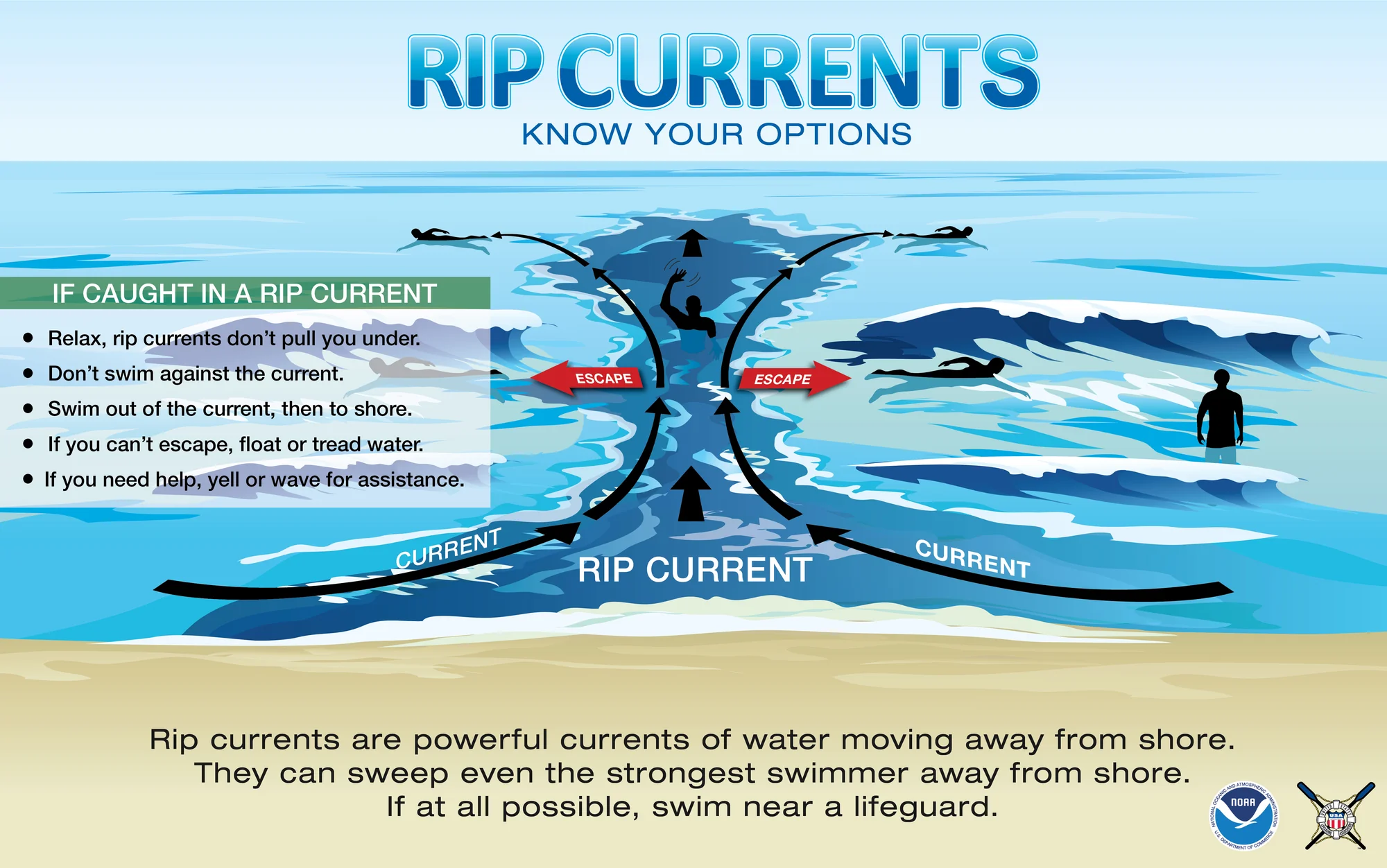
Image: NOAA/National Weather Service
Rip currents are narrow, powerful bands of water moving away from shore. They can show up on any beach, on any flag day, and they are especially common near sandbars, piers, pilings and jetties.
How to spot a rip current
- Look for a gap in the breaking waves, or a calm-looking patch of water surrounded by whitewater.
- Watch for murky or discolored water flowing away from the beach. That trail of sand is often a rip moving offshore.
- Give extra space to the water around piers, jetties and breaks in a sandbar.
If you’re caught in one
- Stay calm. Don’t try to fight the current by swimming straight back in.
- Swim parallel to the shore until you’re out of the pull, then angle back toward the beach.
- If you can’t swim out of it, float or tread water until the current eases, then swim in at an angle.
- If you need help, face the beach, wave and call out.
If someone else is in trouble
Call 911 first. Then look for a lifeguard. Don’t swim out after someone unless you have something that floats to throw or extend to them.
Free loaner life jackets are available at the Alabama Point East public access, in a range of sizes, for children and anyone who isn’t a strong swimmer. Please return them before you leave.
Lifeguards
Staffed towers from March through October
Public beach accesses in Gulf Shores and Orange Beach have staffed towers and patrols from March through October. That’s the stretch when you’ll find the most coverage on the sand.
From November through February, coverage is limited. Gulf Shores may still have patrols on the beach, but the towers are not staffed, and response can take longer. Check the flags before you swim, stay close to shore, and never swim alone — in season or out.
Lightning
If you hear thunder, leave the beach
Afternoon storms roll up quickly on this coast. If you hear thunder, you’re already close enough to be in danger. Pack up, leave the water and the open sand, and get inside a substantial building or a hard-top vehicle. Don’t wait to see lightning, and don’t count on a beach umbrella, a tent or an open pavilion to protect you.
Wait until the storm has clearly moved on before you head back out.
Perdido Key
Florida sand, with its own rules
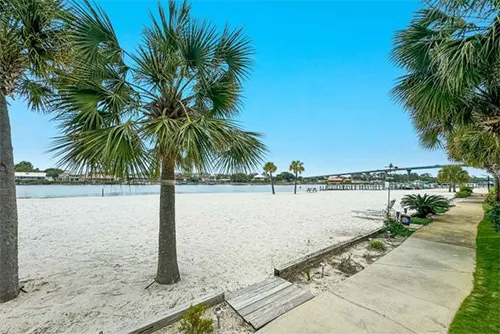
If you’re staying on Perdido Key, you’re in Escambia County, Florida — not Alabama. The flag colors will look familiar, but the rules, lifeguard coverage and daily report come from Florida agencies, not Gulf Shores or Orange Beach.
Check the official Escambia County beach conditions before you go, and still read the flag at your access. For Escambia flag alerts, you can text PBFLAGS to 888777.
Keep Planning
More from our local team
Flags and surf are only part of a good beach day. Use these guides for check-in details, beach rules, and what to do around town.
Book Direct and Save
Choose from 330+ condos and beach homes in Orange Beach, Gulf Shores, Fort Morgan and Perdido Key, with 24/7 customer service and maintenance support.
Questions? Call us at 251.968.8896